
How to Find an Upshur Property Owner
For anyone asking who owns a property in Upshur County, the path is simple. The cleanest route runs address, assessor, deed. MapWV is the starting point. Its search accepts a street or an owner name. It returns an owner-of-record field next to mailing and situs details. Write down the district, map, and parcel number plus the legal description. A street label alone is not enough. From there, turn to the County Clerk's grantor-grantee index for the recorded instrument. The Clerk publishes no public online deed search. A written request or an office visit may be the way in.
- Search the known situs address in MapWV and note the owner-of-record and mailing fields.
- Save the district, full parcel ID, legal description, deed book/page, or instrument number shown.
- Ask the County Clerk for the latest deed and compare the grantee and legal description.
- If the grantee is a business, use the West Virginia SOS entity search to identify the exact organization.
MapWV's Upshur Owner Field
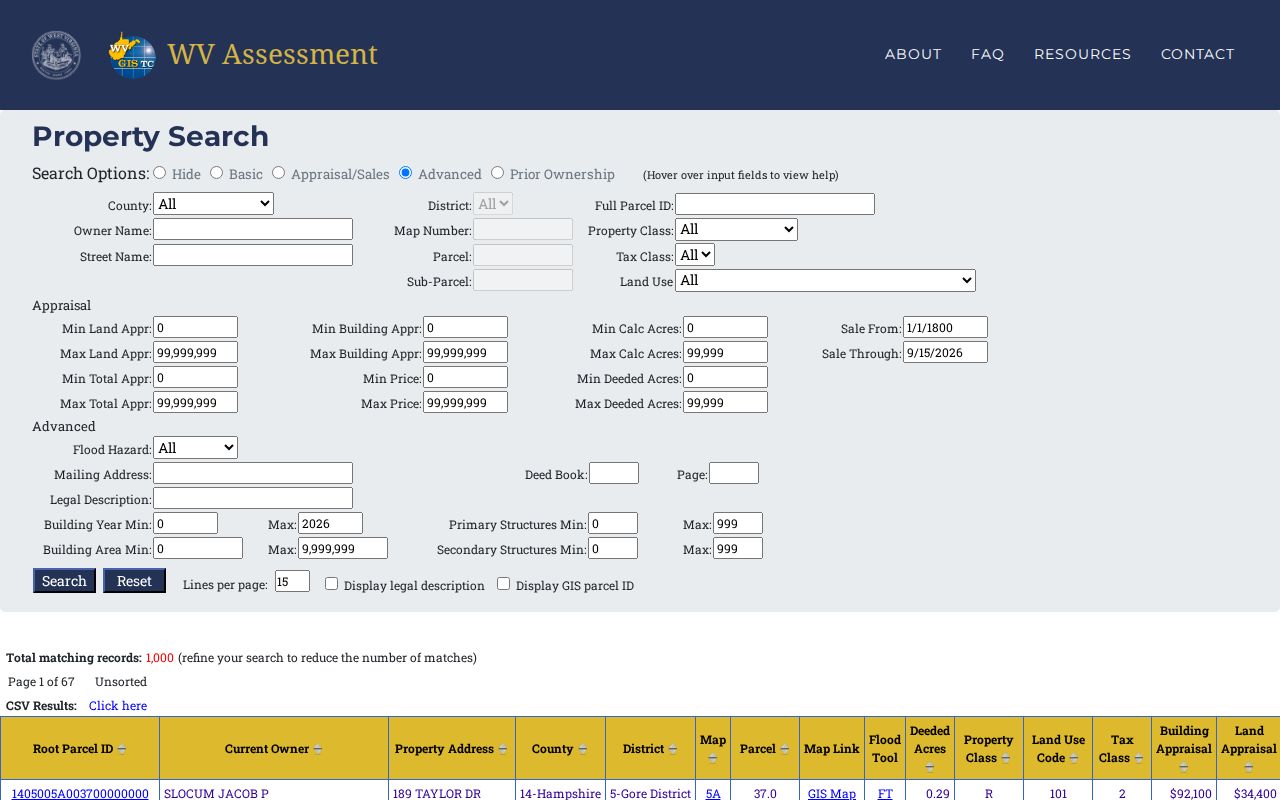
Start with the owner of record. The MapWV assessment query returns that name together with the parcel ID and a deed reference. Expect a mailing address and a physical situs too. These fields tell you who the Upshur County Assessor ties to the tax parcel, not who occupies the house. The form also supports a prior-ownership search. Its historic depth is not stated. Confirm the date range before you treat any result as a full ownership chain. The MapWV owner query opens the official assessment form, and the parcels it returns depend on the search you run.
Confirming the Upshur Deed
The Clerk's grantor-grantee index supplies the recorded proof. Search the person the Assessor lists as grantee. Then compare that document's grantor, date, parcel description, and book and page or instrument number. An address alone may not find it. If the parcel's legal description is all you have, take it to the office. Search the prior owner as grantee only when the question turns to ownership history.
The county publishes no online deed index. In-person use of the Clerk's index or a specific written request remains the route. A deed-record search in Upshur County runs on party names and a date range. So do not count on a public address search.
When an Upshur Owner Is an Entity
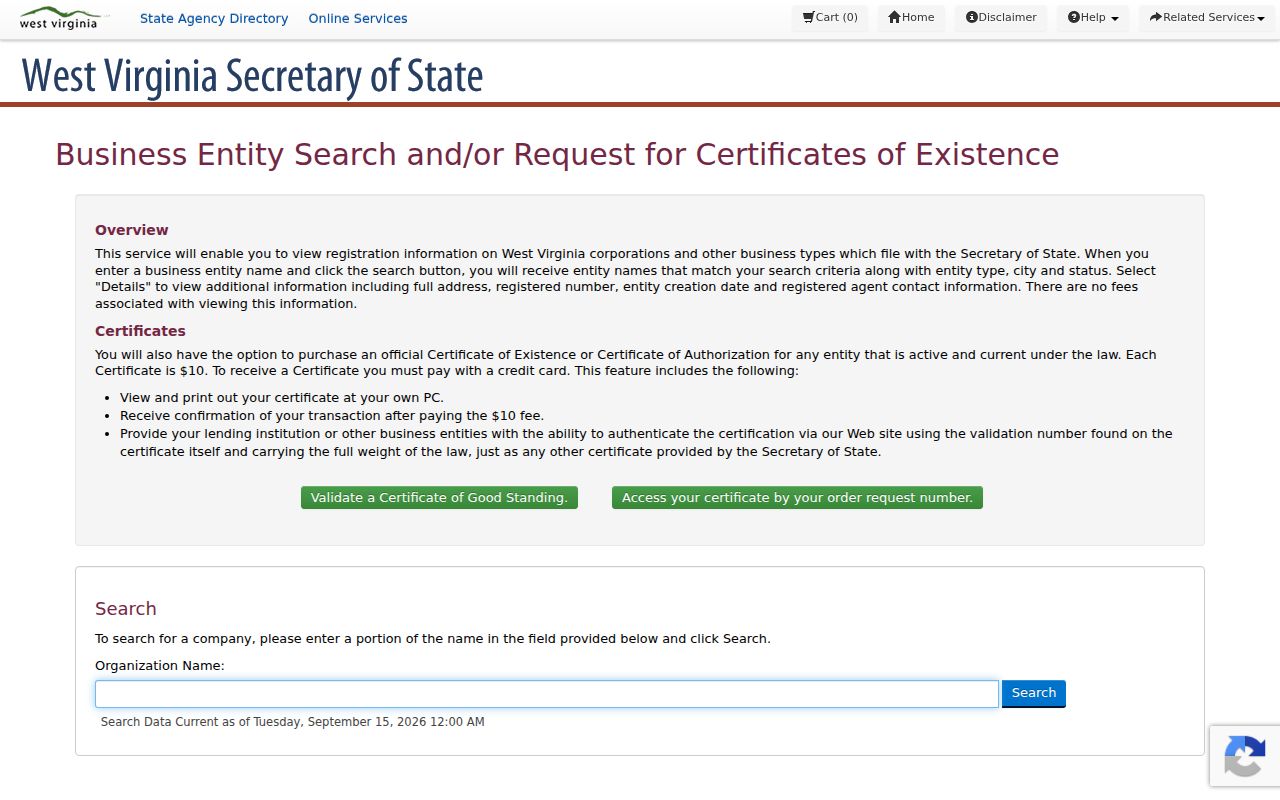
Not every Upshur County owner is a person. An LLC, corporation, trust, or estate can hold land. Search the name exactly as the deed shows it, punctuation and legal suffix included. The state's business entity search takes organization names. Its advanced mode also reaches agent and officer names and supports a wildcard. Results can list entity type, city, status, address, registered number, creation date, and registered agent. That record helps you interpret an unfamiliar grantee, but only a filed deed connects a name to the parcel itself. The state business entity search shows the organization-name form.
Sources Naming Upshur Property Owners
Each record names an owner for its own reason. The assessor keeps the name attached to the tax roll. A deed names the grantee in a recorded conveyance. The GIS viewer ties parcel geometry to assessment details where enabled. The Secretary of State's entity search decodes a corporation or LLC named on the deed. It cannot establish who owns the land. Treat every result as a cross-check, never a substitute for the recorded instrument.
| Source | Owner Info It Gives | Access |
|---|---|---|
| Assessor roll | Owner-of-record, mailing/situs, parcel, and assessment data | Free MapWV search |
| County Clerk deed index | Grantor, grantee, instrument, and legal description | Counter or written request; online index not verified |
| GIS parcel viewer | Parcel geometry and assessment-linked details where enabled | Free statewide viewer |
| WV SOS entity search | Entity status, address, number, registered agent | Free name search; certificate fee applies |
Start with the assessment entry. The owner of record is simply the name that entry lists. That tells you nothing about who occupies the building. The situs marks the physical property address. The mailing line routes tax notices, which may go to a post-office box or even another county. Neither line proves residence. An owner lookup never establishes a current right to possess the home.
How Current Is the Upshur Roll?
No routine update interval is published for the Upshur County tax roll. No sale-to-roll lag is measured either. A recorded deed can therefore be newer than the assessment record. After a recent closing, compare the instrument date on the recorded deed with the assessment card. Ask the Assessor when the new ownership will appear. The newest recorded deed is the confirmation step for any current-owner question. Keep the date on every source. A result pulled before a roll update may still be a correct record of the earlier assessment period. It is simply no longer the latest transfer information.
Buckhannon Mailing and City Limits
A Buckhannon address is often just a postal label. That does not place the parcel inside city limits. South Buckhannon began as its own community and later became a neighborhood, so older deed language can differ from a modern street label. For a permit or zoning question, confirm the municipal boundary with City Hall. Ownership stays with the county. For ownership, the Assessor and Clerk hold the records. Use the situs address to find the structure and the mailing field for tax-notice routing. A mailing address can point elsewhere. It says nothing about residence, so never treat a ZIP code or a city mailing name as a substitute for parcel identity.
Limits of an Upshur Owner Lookup
A name on the tax roll is not the same as proof of ownership. The assessor lists whoever receives the bill. Deed records name the parties to a recorded transfer. Neither one amounts to a title opinion. A parcel can change hands before the new deed reaches the recorder. So the roll lags behind reality. Entities, trusts, and estates often stand between a family name and the land itself. Public Upshur County property records also leave private and protected facts about an owner untouched.
Lawful use. Use these records for property research, title diligence, tax review, and house history. West Virginia law prohibits stalking and harassment; do not use an address or owner name to follow, threaten, or pressure anyone.