
Tracing Former Upshur Property Owners
A chain works only when each earlier owner connects to the next through a recorded instrument for the same land. The assessor supplies the current parcel and its legal description, and the County Clerk's index adds grantor and grantee names with the filing reference. The chain may reach an older book. Community names may look unfamiliar. Preserve the description exactly. Then ask a simple question. Which volume, archive, or predecessor record group applies, since the county's organization date only marks where its own books begin?
| Source | Years It Covers | Where Held | What It Shows |
|---|---|---|---|
| County Clerk deed books | County era begins 1851; exact runs not located | Upshur County Clerk | Recorded parties, land descriptions, and transfers |
| Online index and images | County-specific cutoff not verified | Ask Clerk about counter or written search | Coverage and image availability for each year |
| WVU court book | 1853-1856, incomplete item | WVU ArchivesSpace | Court context, not a complete deed chain |
| Historical Society abstracts | Births 1853-1897; deaths 1853-1928 | Repository publications | Family context and research leads |
Title history calls for the deed chain first. Once the land record gives you a name or date, turn to WVU, the Historical Society, newspapers, or vital abstracts to fill in people and places. None of those sources replaces a recorded conveyance.
WVU's Early Upshur Court Book
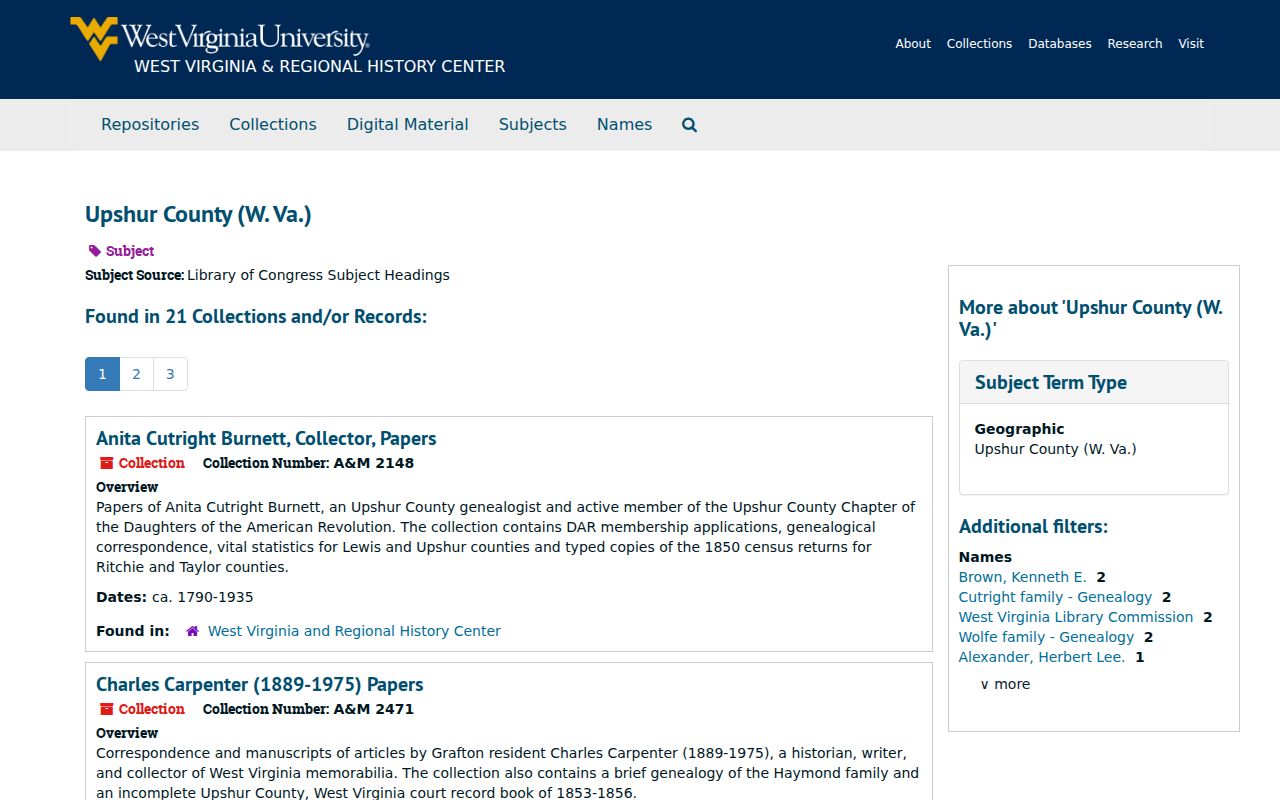
WVU Archives holds an incomplete Upshur County court record book covering 1853 through 1856. That makes it a rare, named layer of early record. It is not a complete deed series. Nor does it prove every transaction from those years survives. An estate order, land dispute, or other court action might still appear there. The collection description helps a researcher frame a question for the repository.
The WVU Upshur collection catalogue groups local collections and points to access and copy details.
Walking Upshur's Deed Chain Backward
The backward search repeats one pattern: a prior grantee became the next grantor. Begin with the most recent recorded instrument. Its grantor name then becomes your earlier owner's grantee search. Compare the land description at every step. One person may have conveyed several tracts. Or they conveyed only a portion of one. Estate transfers break the ordinary pattern. They arrive with a fiduciary deed or court order.
- Find the latest instrument in which the present owner is grantee.
- Copy its grantor, instrument date, deed type, and exact legal description.
- Search that grantor as grantee and compare the land description and book/page.
- Repeat until the deed-book run or useful index ends; then ask for the next volume.
- Grantor
- The party who conveyed the interest in that instrument.
- Grantee
- The party who received the interest.
- Chain of title
- The ordered set of transfers affecting the same tract.
- Legal description
- The land identity used to connect older deeds when the address changed.
Upshur Historical Society House History
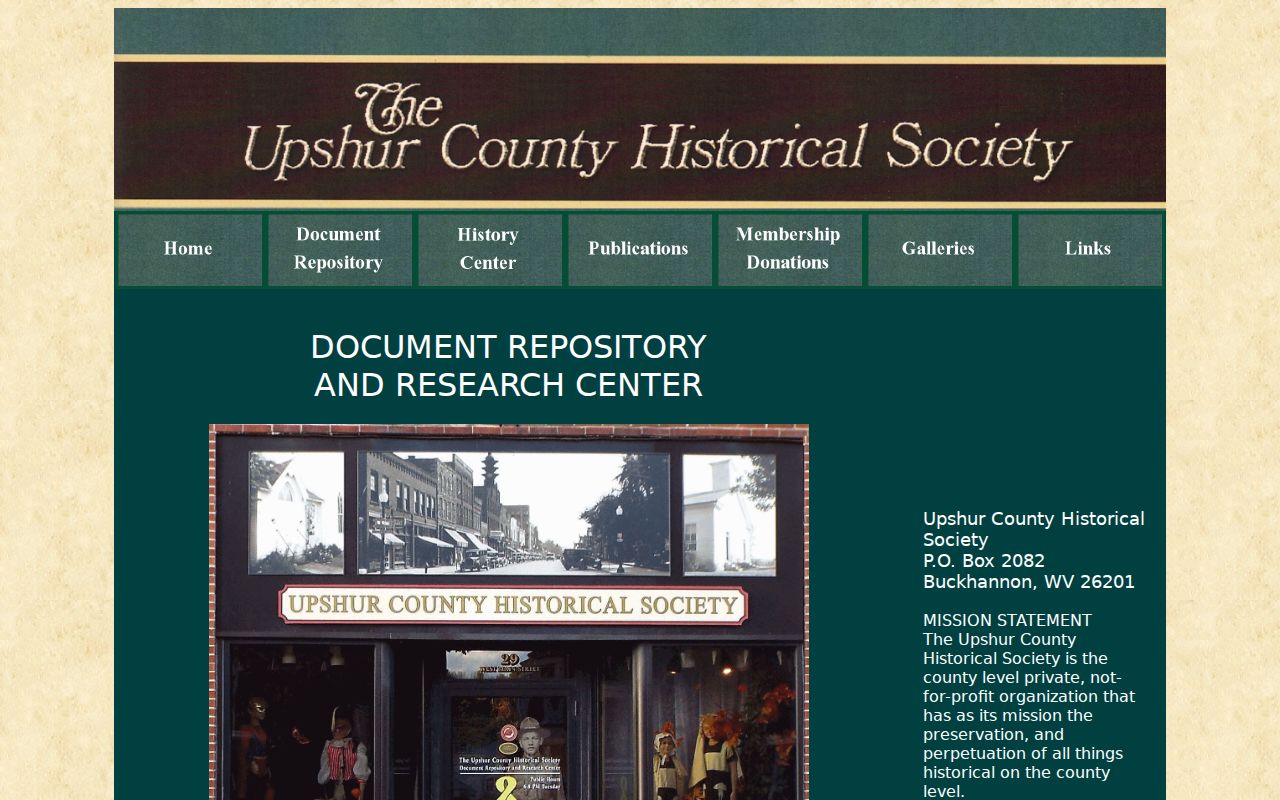
The Upshur County Historical Society Repository at 29 West Main welcomes researchers by appointment. Holdings include family collections, local maps, and newspaper references. The collection also holds cemetery books, obituary and burial listings, marriages, wills, church histories, census material, and birth abstracts. Reproduction requires permission. Ask for the collection or publication that matches your owner, community, or period. An open-ended search request will not get far. The Historical Society Repository page describes the holdings and appointment access.
Old Upshur Place Names in Deeds
Rural community names can describe a place. Post-office labels and modern street addresses can too. The same place may carry each identity in a different era. Buckhannon's South Buckhannon story shows how a former community name became a city neighborhood. A current road label may not match an older deed's wording. Keep the original wording in your notes. Search spelling and community-name variants separately. The legal description, parcel number, and recorded plat tie those references together. A postal identity is not a municipal boundary. Historical directories and newspapers explain place names. But the deed remains the source for the transfer itself.
Probate Transfers in Upshur Records
A clean chain can pause when an owner dies. The next recorded transfer may be an executor's deed. It may also be a deed from heirs, an estate sale, a partition order, or another fiduciary instrument. Search under the deceased owner's name. Try the estate name and the executor or administrator too. The legal description matters most of all. A will may explain intent. But it does not by itself show that title passed by recorded conveyance.
The County Clerk's probate and will books hold part of the trail. The court file holds other parts. Ask for the estate number and any order or deed affecting the land. Then return to the recorded instrument index to reconnect the parcel.
Upshur's 1851 Record Beginning
Upshur County's records story starts with county organization in 1851. Buckhannon's history places the first county court session on June 17, 1851. The location was Andrew Poundstone's home. That date anchors local government history. An earlier chain may still run through Virginia predecessor records. When a description reaches back before county formation, the County Clerk should confirm the book sequence. The Clerk can also confirm the proper record group.
The incomplete 1853-1856 court book and the Historical Society's early vital abstracts offer separate clues. Neither is a complete land archive. A missing online image never means a record failed to exist.
How Far Back Upshur Ownership Reaches
Upshur's local deed books begin in 1851. No online cutoff or complete book run is published. Ask the Clerk and West Virginia Archives about the next earlier index or volume. A chain crossing 1851 needs its predecessor jurisdiction identified from the deed calls first. Only then should you search a different archive.
Lawful use. Former-owner research can support house history and title diligence. Do not use historical names, current addresses, or family records to follow or harass a living person.